
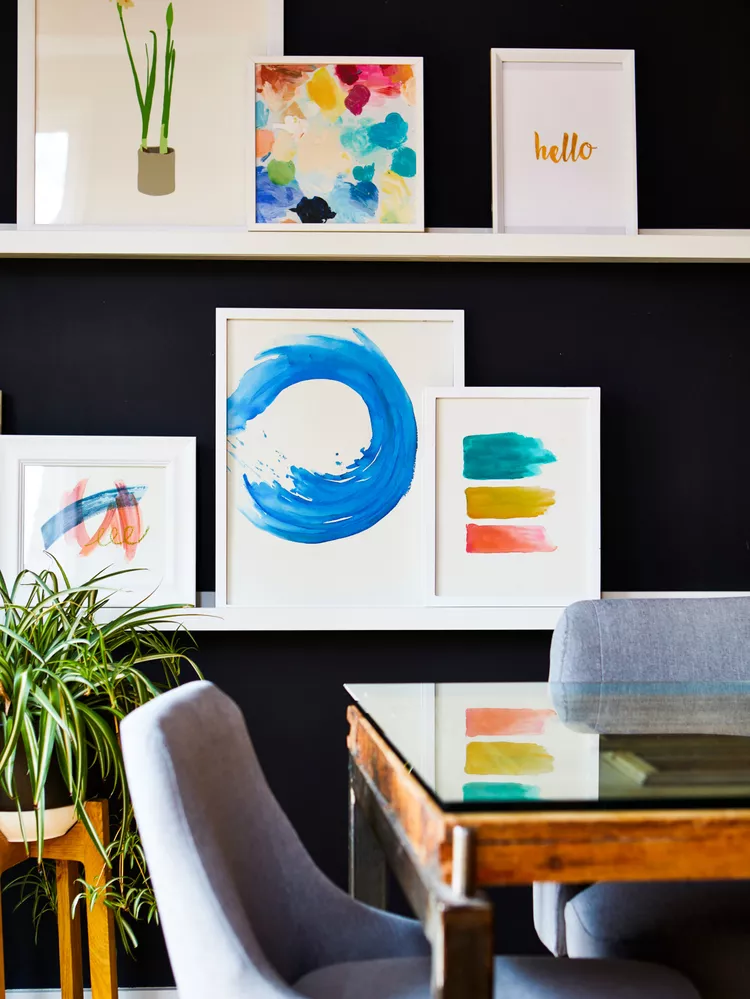
Artwork doesn’t always need hooks, bulky shelving, or a complicated gallery wall. Interior ledge ideas create a narrow resting place for framed pieces while keeping the wall flexible. Because pictures can be moved without repeatedly making new holes, ledges work especially well for changing displays, rented homes, and rooms where decoration evolves often.
Build the Display Around a Shallow Profile
A picture ledge usually needs only enough depth to hold a frame securely. Keeping it shallow prevents it from behaving like a conventional shelf and helps the artwork remain the visual focus.
A small raised front lip is useful because it reduces the chance of frames sliding forward. Wood, painted MDF, plaster, and slim metal profiles can all work depending on the room.
For spaces with a focal hearth, browsing hearth-focused interiors can also show how artwork and architectural features compete for attention. A narrow ledge should complement the focal point rather than create a second heavy horizontal line.
Layer Frames Instead of Spacing Everything Evenly
Perfect spacing can make a ledge feel stiff. A more relaxed arrangement usually comes from overlapping a few frame edges and mixing different heights.
Place the tallest piece toward one side or slightly off center. Smaller prints can sit in front, creating depth without requiring extra wall area.
Broader home design guidance can provide useful references for combining artwork with furniture proportions. The strongest ledge arrangements usually relate to something beneath them, such as a sofa, console, bed, or dining bench.
| Display Choice | Visual Effect | Practical Note |
|---|---|---|
| Similar frame sizes | Calm and ordered | Easy to balance |
| Mixed heights | Casual and layered | Avoid overcrowding |
| One large print | Strong focal point | Needs secure support |
| Frames plus objects | Collected look | Keep depth controlled |
Use Ledges in Places Where Shelves Feel Too Bulky
Hallways are strong candidates because traditional shelves may project too far into circulation space. A narrow art ledge can add character while keeping the walkway comfortable.
Dining rooms, stair landings, bedrooms, and home offices also work well. In smaller rooms, continuing one ledge across a wide section of wall can feel cleaner than installing several separate shelves.
Similar thinking appears in outdoor home ideas, where narrow architectural projections add detail without overwhelming a facade. Indoors, the ledge should feel like part of the wall rather than freestanding storage.
Coordinate the Ledge With the Wall
Painting the ledge the same color as the wall makes it visually recede. This approach works particularly well when the artwork is colorful or highly detailed.
Natural wood introduces warmth and can connect the display to flooring, furniture, or door trim. Dark-painted ledges create stronger contrast on pale walls and can make simple frames look more intentional.
Think about the side view too. In narrow rooms, a thick ledge may appear heavier from an angle than it does from the front.
Where Art Ledges Often Go Wrong
The biggest mistake is turning a picture ledge into a crowded storage shelf. Once candles, books, plants, ornaments, and frames all compete for space, the clean display line disappears.
Installation height matters as well. A ledge positioned too close to the ceiling disconnects the art from the furniture below, while one installed too low can interfere with seating or head clearance.
Heavy framed artwork also needs suitable wall fixings. A narrow profile doesn’t reduce the actual weight being supported.
Frequently Asked Questions
How deep should an interior art ledge be?
Many displays work with a relatively shallow ledge because frames only need enough room to sit securely. The exact depth should reflect frame thickness and whether small decorative objects will be included.
Can picture ledges work in a rental home?
They can, although installation still usually requires wall fixings. Their advantage is that several pictures can share one mounted ledge instead of requiring separate holes for every frame.
Should artwork on a ledge be the same size?
No. Mixed sizes often create a more relaxed arrangement. Repeating one frame color or art style can provide enough visual consistency even when dimensions vary.
Keep the Art Easy to Change
The real advantage of an interior ledge is flexibility. Build a simple foundation, leave some open space, and allow the display to change over time. When frames can be rearranged in minutes, artwork becomes something you can experiment with rather than a layout you’re afraid to disturb.