
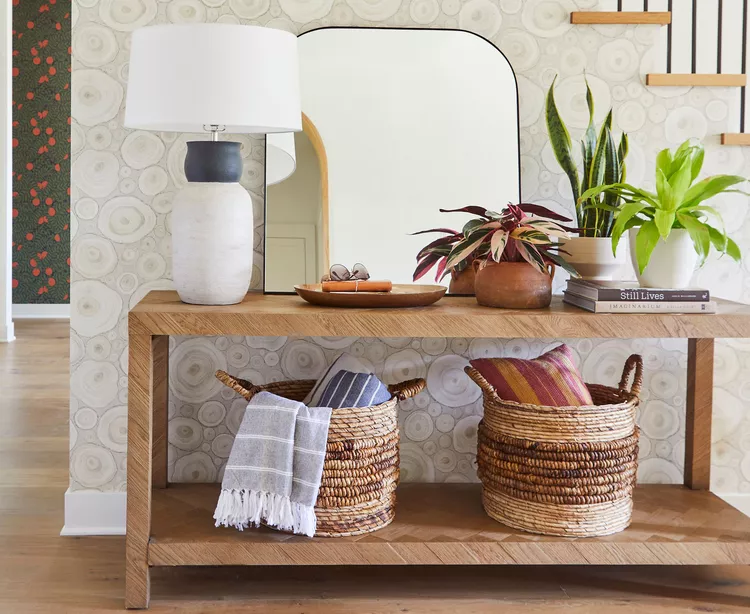
Console tables can turn an unused wall into practical storage and display space without blocking movement. Their shallow depth makes them especially useful in hallways, entryways, behind sofas, and narrow transitional areas. The key is keeping the setup visually light while protecting the walking path.
Measure the Passing Space First
A console should never make people turn sideways just to move through the room. Measure the available wall and the clear floor area before choosing furniture, especially near door swings or busy hallways.
A visually perfect table that interrupts circulation quickly becomes frustrating. Function should determine depth before style determines finish.
Match the Table to the Wall Length
A tiny console on a long empty wall can look lost. An oversized one can make the corridor feel compressed. Aim for a piece that fills enough wall space to feel intentional without stretching into doorways, vents, or switches.
Give the Console a Clear Purpose
Decide whether the console is mainly for storage, display, entryway drop-off, or filling an awkward architectural gap. Examples of residential furniture planning can help show why furniture works better when its purpose matches the space around it.
Entry consoles may need a tray and small drawer. A console behind a sofa may work better with lighting, books, and fewer loose accessories.
| Console Use | Helpful Feature | What to Avoid |
|---|---|---|
| Entryway | Drawer or tray | Deep furniture |
| Hallway | Slim open base | Bulky lower cabinets |
| Behind sofa | Lamp or books | Excessive height |
| Empty wall | Art above | Too many small objects |
Use the Wall Above the Table
The wall can provide visual impact without taking away floor space. A mirror, framed artwork, or restrained gallery arrangement gives the console height and makes the narrow setup feel more complete.
Studying villa interior arrangements can offer ideas for connecting wall decor with furniture below it. You don’t need a large house to use the same principle: create one clear vertical relationship rather than scattering unrelated pieces.
Keep the width of the wall decoration reasonably connected to the table beneath it.
Add Storage Without Making It Heavy
Baskets beneath an open console can hold shoes, blankets, or seasonal items while keeping the top clear. Drawers are useful for keys and small objects that otherwise create clutter.
Ideas drawn from organized living spaces can be adapted by using concealed storage only where it solves a real problem. Filling every available gap with a container often makes a narrow area feel busier.
Use Lighting Carefully
A small lamp can make an entry or hallway warmer, but check cord placement. Cables running across a passing area or hanging visibly beneath an open table can undermine an otherwise clean arrangement.
Common Console Table Mistakes
Depth is the biggest issue in narrow spaces. A table that projects too far into the walkway can make the entire area uncomfortable even when it technically fits.
Another mistake is covering the tabletop with decorative objects. Passing areas benefit from stronger editing because people view them while moving. One lamp, one bowl, and one decorative piece often create more impact than a crowded collection.
Frequently Asked Questions
How deep should a console table be for a narrow hallway?
Choose the shallowest depth that still provides the function you need. Always measure the remaining walking area rather than judging the table dimensions by themselves.
What should go above a console table?
Mirrors, one large artwork, or a small coordinated group of frames usually work well. The wall decor should connect visually with the console rather than floating far above it.
Can you put seating under a console table?
Yes, if the table height and available floor space allow it. A small stool or bench can provide occasional seating, but avoid adding one where it interferes with normal circulation.
Protect the Path Before Adding Decoration
The strongest console-table arrangement starts with comfortable movement. Once the table fits the walkway, add storage and decoration according to what the area genuinely needs. Narrow rooms usually respond better to restraint than extra furniture, so treat every inch of depth as valuable.