
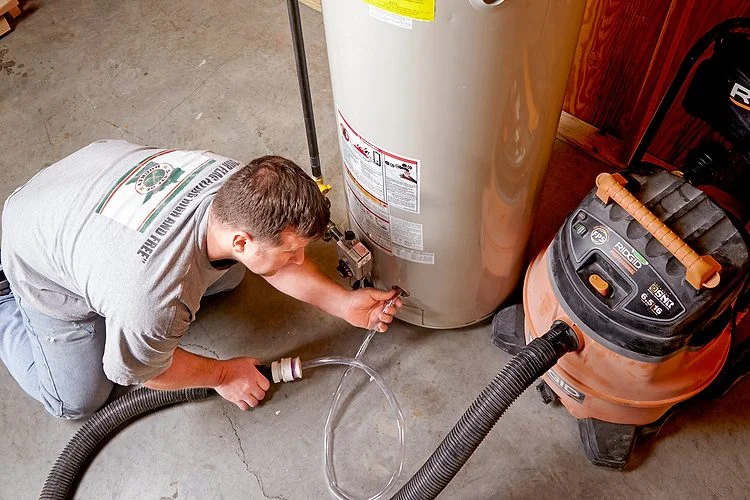
Water heaters spend years operating quietly in the background, which makes them easy to ignore until hot water becomes inconsistent. Regular water heater maintenance focuses on controlling sediment, watching for leaks or corrosion, and identifying performance changes before they turn into expensive failures.
Gas and electric models have different service requirements, so always follow the manufacturer’s instructions and avoid opening components you aren’t trained to service.
Inspect the Heater Before Problems Become Obvious
Look around the tank and nearby plumbing for dampness, corrosion, rust streaks, or mineral deposits. A small change around a fitting can be easier to address before it develops into a larger leak.
Keep the area around the unit accessible rather than surrounding it with storage. Homeowners who maintain written schedules sometimes combine water-heater checks with broader home maintenance notes so important equipment isn’t forgotten.
Understand Why Sediment Matters
Minerals carried by household water can gradually settle near the bottom of a storage tank. The amount depends on local water conditions, usage, and the heater itself.
Listen for Unusual Heating Sounds
Popping or rumbling sounds may occur when sediment buildup affects the bottom of a tank. Noise alone doesn’t prove the tank is damaged, but a new or worsening sound is worth investigating.
Flushing procedures vary by heater. Hot water can cause serious burns, so follow manufacturer instructions closely and use professional service if you’re uncertain about safely draining the unit.
Watch Temperature and Hot-Water Performance
Changes in everyday performance often provide the first warning that something needs attention. Water that takes longer to heat, runs cold sooner, or fluctuates unexpectedly can point to several possible causes.
Homeowners browsing kitchen and household reading may see many efficiency ideas, but heater maintenance should begin with the equipment’s actual manual and operating condition rather than generic adjustments.
| What You Notice | Possible Cause | Useful Response |
|---|---|---|
| Rumbling sounds | Sediment buildup | Arrange inspection or flushing |
| Water near tank | Leak or condensation | Locate source promptly |
| Less hot water | Heating or sediment issue | Check performance |
| Rusty connections | Corrosion | Have fittings evaluated |
Examine Visible Connections and Safety Areas
Check accessible pipes, fittings, and valves visually without disassembling them. Moisture around a connection should not be dismissed simply because the tank still produces hot water.
Gas appliances require extra caution. If you smell gas or suspect combustion or venting problems, don’t attempt routine maintenance as a substitute for qualified service.
A simple household file containing manuals, service dates, and everyday home care ideas can make long-term maintenance easier because you can compare today’s condition with previous inspections.
Where Water Heater Maintenance Goes Wrong
Aggressive DIY work can create unnecessary risk. Opening electrical covers without isolating power, handling very hot water carelessly, or adjusting gas components without proper knowledge can turn maintenance into a safety problem.
Another mistake is treating every leak as minor. Water appearing near the heater may come from plumbing, a valve, condensation, or the tank itself. The source matters, and persistent leakage deserves prompt evaluation.
Frequently Asked Questions
Does flushing a water heater improve efficiency?
Removing significant sediment may improve heating performance in some storage heaters, but the proper procedure and maintenance interval depend on the model and local conditions. Follow the manufacturer’s guidance.
How can I tell if my water heater is failing?
Repeated leaks, corrosion, inconsistent heating, unusual sounds, or declining hot-water capacity can justify inspection. No single symptom confirms that replacement is necessary.
Should water heater maintenance be done professionally?
Many visual checks are simple, but work involving gas systems, wiring, internal components, serious leaks, or unfamiliar flushing procedures is better handled by a qualified professional.
Make Maintenance a Habit, Not a Rescue Job
A water heater doesn’t need constant attention, but it shouldn’t disappear from your maintenance plan either. Inspect it periodically, recognize performance changes, and deal with leaks or corrosion early. Safe preventive care may help the system operate more predictably while giving you more warning when professional repair or eventual replacement becomes necessary.